
Praxis Heinis
Sexless relationships
When it has gone unspoken for so long that nobody dares to start
Sexless relationships: therapy in Munich and online, when neither of you brings that topic up anymore
At some point in time, a week without sex turned into a month, and today you could not even say when you were last intimate with each other. There is rarely one single reason. It could be that a baby arrived, somebody got ill, work is eating up the evenings, or an argument never got resolved. And then time passes, the pause can turn into a state, and the whole thing is growing so big that neither of you likes to talk about it anymore.
Both of you keep your distance from the topic, usually for good reasons: whoever brings it up risks an argument and accusations, so it is easier to leave it where it is and not risk mentioning it. The trouble is that this is exactly what moves you further apart at this point.
Nevertheless, many of these couples get on very well in their daily lives. They laugh together, the household, the kids and the calendar all work, and they would call themselves a good team. And still they feel like flatmates, or like siblings. For other couples the mood turned irritable long ago, and the missing sex is the part that gets talked about least.
I work with people in exactly these situations: with couples, with individuals whose partner will not come along or who want to sort things out for themselves first, and with people who are involved in more than one relationship. Whatever you bring, you do not have to explain or justify it to me.
When couples come to me for the first time, it is often the first time they get to say the things they are afraid of out loud, mostly afraid of the other person’s reaction, or things that are simply uncomfortable. A safe space opens up where these topics can be talked through and worked on, and where the way back to each other becomes visible again.

What brings people to my practice
- No sex for years, and nobody mentions it or dares to speak about it.
- Rejection: one person no longer wants sex, the other feels turned away.
- One-sided: one person wants more sex and keeps asking, the other blocks every time.
- Lost desire: unclear whether it is the body, the relationship or yourself.
- A sexless relationship: a good team in everyday life, and still one or both of you suffer from it.
- Avoided intimacy: hugs get skipped so that no expectation arises.
- The baby is here, the joy is big, only the sex has stopped.
- Sex that is no fun: better none at all than this.
- Different wishes: one person wants a different kind of sex, and neither of you knows where to go from there.
- An affair, opening up or separating: a thought that is in one or both of your heads.
- Tried everything: scheduled dates, a weekend away, self-help books, and nothing changed.
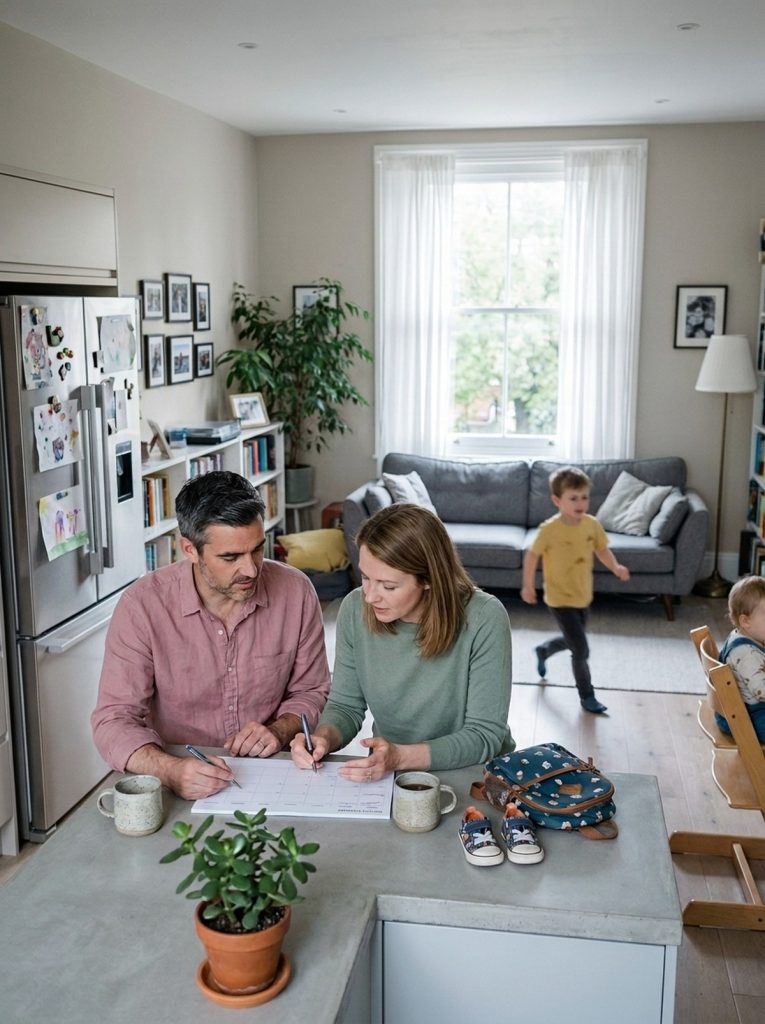
Why bringing the topic up gets harder over time
The longer nothing happens and nobody says anything, the more seems to be at stake if something does happen. The person who has desire and used to make the first move stops asking at some point, because every No hurts and every rejection wounds. The person who turns the other down feels guilty about not being enough and withdraws from every touch, even the ones that have nothing to do with sex, so that no expectation arises and no disappointment follows. Both have their reasons and mean well, and sadly both end up confirming each other in saying nothing, because the hurt would otherwise grow too big.
What plays into this is almost always several things at once: stress and exhaustion, a body that has changed, medication or pain, old hurts that were never spoken about, shame, conversations in which you talk past each other, different ideas of what sex is even allowed to be, or a sexuality that never quite fitted one of you. I explore with you what could be the causes and explanations for your situation, even though there isn’t really one single cause. Usually these things are connected, and which of them come together in your case is something we find out together.
How I work with you
Before we get to the actual point of conflict, I start with your relationship, so that I get to know you both: how you talk to each other, how your relationship developed and what foundations it was built on. From there I move into this topic with questions like: What happens when one of you is disappointed? Where do you feel safe with each other, and where not? That already tells me a lot, because whatever works or fails in your communication in general tends to weigh especially heavily in your sex life. With couples I use, among other approaches, Emotionally Focused Couples Therapy (EFT), which looks at exactly these patterns.
Then we go on to talk about the sex itself. That can be as concrete or as loose as it feels comfortable for you. What was good before, what do you miss today, what do you not actually miss at all, and what do you never want back? Part of this is a sexual history, a careful look at how your sexuality has developed. Where physical causes are possible, say hormones, pain, an illness or the side effects of medication, I recommend a medical check and bring the result into our work.
Between sessions there are small exercises and tasks for home. What we discuss in the session is something you can then practise together and keep working on. This time between sessions matters, because that is where you work with each other above all, not with me.
In case you are wondering whether there is a minimum: how much sex belongs in your relationship is genuinely your decision, not a requirement and not a statistic either.
Whether you end up sleeping with each other again, finding a different form of intimacy, or realising you want to clarify something fundamental about your relationship, is open. I will not force you into one or the other path. If at some point the question comes up whether you stay or go, I work with that too; more on the page about decision conflicts.


Alone, as a couple or with more than two
As this is a topic that belongs to both of you in your relationship, it is preferable when you show up together. Nevertheless, you can also come alone at first. That is always a good start, especially if your partner is not ready yet or if you want to work out for yourself first what you actually want. The invitation for your partner stays open the whole time, and bringing them in early is something I recommend. We talk that through together as well.
If you come as a couple, please bear in mind that I am not the referee who rules on who wants too much or too little. What interests me is what happens between you two, your dynamic, and what the underlying patterns are. Also, if you are involved in more than one relationship, the people concerned come together or separately, whichever is right for you.
I am a State-Authorized Psychotherapy Practitioner with a focus on relationship and sex therapy. Individual sessions last 50 or 80 minutes, couple sessions 80 minutes. We work at my practice in Munich or online by video, in English and in German, evenings and weekends included.
If coaching fits better: RelatingWise
Frequently asked questions
No, not automatically. A relationship without sex can hold, as long as you both live well with it. It gets difficult when one of you suffers from it and nobody talks about it anymore, and that is exactly where therapy comes in.
One of the first steps is to have a conversation that does not end in a fight, and where you can really see each other. It can help to talk about intimacy and closeness first, then discuss frequency, and to talk about what you miss rather than what the other person does wrong. If you keep going round in circles, couples or sex therapy is the place where this conversation can happen with support.
Yes, you can come alone, even if your partner does not want to take part. We then look at what you need yourself, how you can raise the subject, and whether it makes sense to bring your partner in later.
There isn’t an easy answer. Often both play a role, or can play a role, plus your body, everyday life and your history. I look at all of these factors with you, without judging or speculating beforehand about where the problem lies or whether it lies with you.
That depends on how the two of you feel about it. The answer is No if it is right for both of you and you can talk about it openly. The answer is Yes when at least one of you suffers from it or you both sense that something is missing. People who get on well in everyday life often have a lot to lose by bringing it up, and that is why they stay silent for so long.
No, if you are both enjoying your relationship and it is right for you. Do come if you are unsure and feel that something is wrong, if you are suffering, or if you would like to deepen your intimacy in a different way.
You do not have to decide that in advance, because I offer both. In the first sessions I go into exactly what the goal of what we discuss is, and the focus of our therapy follows from that.
Only as far as you want to. I do ask concrete questions, because vague answers rarely get us anywhere when it comes to sex, but you set the pace, and a no is always fine with me.
Yes, there can very well be a physical cause, for example hormones, menopause, pain, an illness or medication. When that is the case, you can think about a medical check, and we can work with that in parallel in our sessions.
I cannot seriously estimate that in advance. After the first sessions I see more clearly and tell you what to expect.
Yes, sessions can take place online by video, or you come to my practice in Munich. You will find the rates on my fees page. The discovery call to ask questions is free.
You can book a direct session with me, either alone or as a couple. If you are not sure yet, book a free discovery call first.
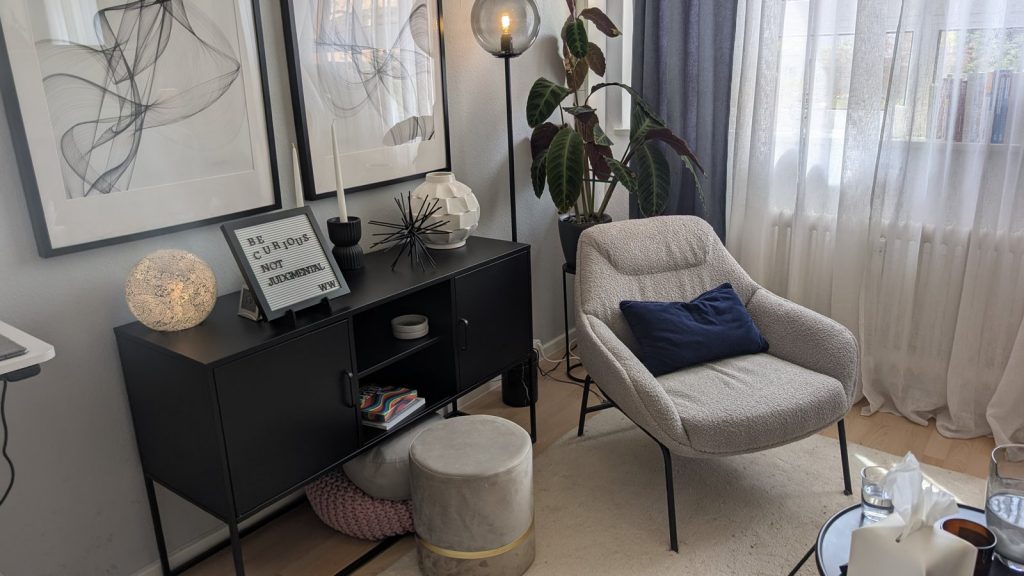
When is a good moment to reach out for support
There is definitely not a number of months or a certain time after which a sexless relationship becomes a problem. If you both enjoy your relationship and live with it well, it is not a problem. Nevertheless, support becomes useful when at least one of you suffers from it, when every conversation about it ends in an argument or uncomfortable silence, when you avoid intimacy so that no expectations arise, when you have to fear disappointing the other person, or when thoughts of an affair or of separating were already there.
And even if you have already waited for many years, it is never too late to come and seek support.
Do you work with these themes yourself?
For professionals I offer supervision for professionals and trainings on relationship diversity (see the overview).